
Where to actually start, in what order, and which resources are trustworthy. Whether you’re curious, researching, or already practicing.
- What “Learning About Islam” Means
- Your Islamic Learning Roadmap
- Start With the Core Beliefs
- Avoiding Common Misconceptions
- Understanding the Five Pillars
- Reading the Quran as a Beginner
- Learning About the Prophet ﷺ
- Trustworthy Sources & Avoiding Misinformation
- If You’re Not Muslim and Just Curious
- If You’re a Muslim Deepening Your Knowledge
- A Simple First-Month Study Plan
- Common Mistakes
- FAQ
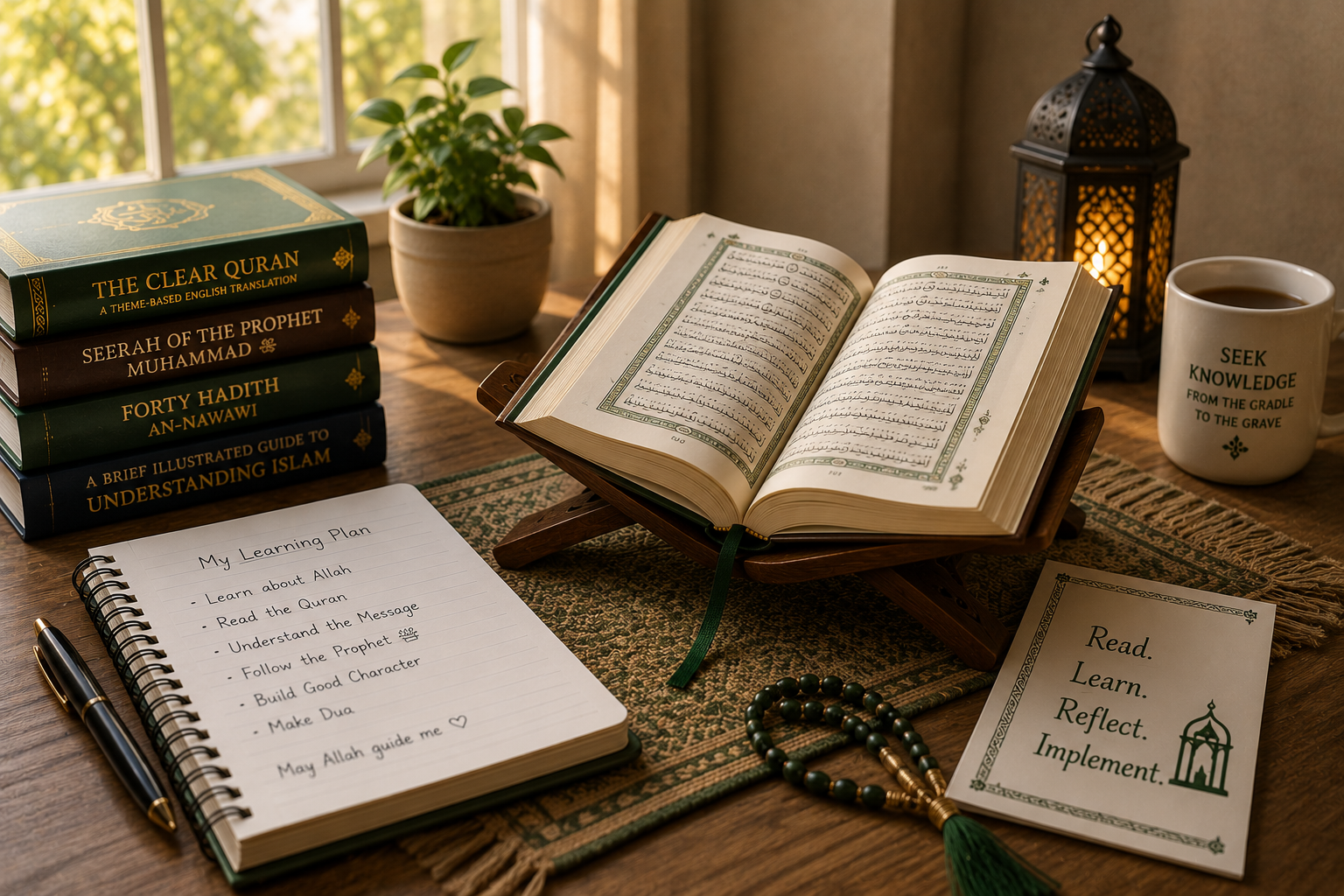
If you’re searching for how to learn Islam properly, the hardest part is usually knowing where to begin. You can find thousands of videos, books, lectures, and opinions online, but more information doesn’t always mean better understanding. What follows is a clear, structured path, starting with what actually matters first — whether you’re simply curious, considering the faith, or already Muslim and looking to go deeper.
You don’t need to read every book or watch every lecture to understand Islam. What helps most is a handful of reliable starting points and a sensible order to approach them in.
To learn about Islam properly, start with the core beliefs (the Six Articles of Faith) and the Five Pillars, then read the Quran in a reliable translation alongside a basic overview of the Prophet Muhammad’s ﷺ life. Stick to established scholars, verified Islamic organizations, and reputable books instead of random social media accounts. Pace yourself — understanding Islam is a gradual process, not something to rush through in a weekend.
How to Learn Islam Properly: Your Learning Roadmap
If you’d rather see the order laid out first, here’s how this guide is structured:
- Understand Islam — what it means and what Islam teaches about Allah
- Learn the Six Articles of Faith — the core beliefs underneath everything else
- Learn the Five Pillars — the framework of practice
- Start reading the Quran — in translation, a little at a time
- Learn the life of Prophet Muhammad ﷺ — the Seerah, in general overview
- Learn Salah, wudu, and daily worship — see our guides on wudu and Salah
- Study with a teacher — a mosque, class, or knowledgeable person to ask questions
- Go deeper — tafsir (Quranic commentary), hadith, fiqh, and more detailed Seerah
What Learning Islam for Beginners Actually Means
The Arabic word Islam comes from the root s-l-m, which relates to peace and safety. In religious usage, the term refers to submission to Allah. Depending on why you’re here, “learning about Islam” can mean different things: understanding it academically, exploring it as a possible faith, or deepening your practice as someone who’s already Muslim. It’s worth being honest with yourself about which one you are, since it changes what “enough” knowledge looks like.
Islamic knowledge for a beginner can be thought of in three broad areas: belief (aqidah), worship (fiqh/ibadah), and character (akhlaq). You don’t need to master all three at once. Belief comes first, since everything else grows out of it. A common beginner mistake is jumping straight to fiqh questions (what’s allowed, what isn’t) before belief has a chance to settle. The rules end up feeling arbitrary when you learn them that way. You may notice this yourself: a rule that seemed strange in isolation often makes sense once you understand the belief it’s protecting.
“Read, in the name of your Lord who created.”
This was the very first revelation to the Prophet Muhammad ﷺ. A command to read and seek knowledge, which is why learning holds such a central place in Islam.
Start With the Core Beliefs
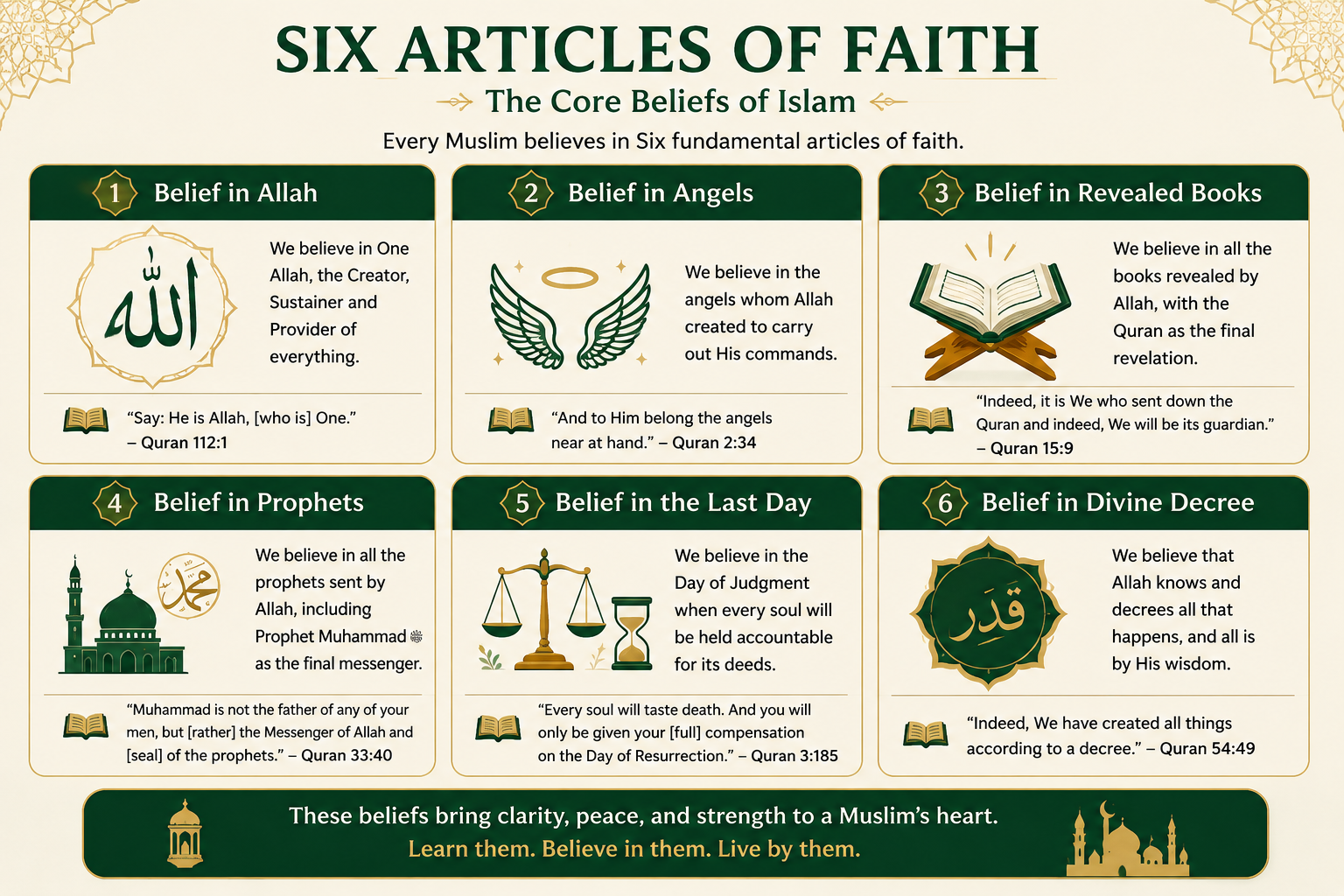
Before rituals or rules, Islam asks you to understand six areas of belief (iman), drawn from the well-known Hadith of Jibril, where the angel Jibril asked the Prophet ﷺ to define faith:
- Allah — One God, without partners, equals, or physical form
- The angels — Unseen beings carrying out Allah’s commands
- The revealed books — believing in the books Allah revealed, with the Quran as the final revelation
- The prophets — From Adam through Abraham, Moses, Jesus, and Muhammad ﷺ
- The Day of Judgment — Accountability for one’s life in the Hereafter
- Divine decree (qadar) — Allah’s knowledge and will encompass all things
Source: Sahih al-Bukhari 50 and Sahih Muslim 8, Book of Faith (Hadith of Jibril) — sunnah.com/bukhari:50
You don’t need a lecture-level grasp of each point on day one. If you can honestly say “I understand and accept this as a framework” when you reflect on them, that’s a reasonable foundation to build from. Qadar (divine decree) is usually the one that takes longer to sit comfortably with. If it makes you pause and re-read the list twice, that’s a completely normal reaction, not a sign you’re doing something wrong. For a fuller look at the first of these, see our guide on what Islam teaches about Allah.
Common Misconceptions to Avoid Early On
A few misunderstandings come up often enough that addressing them early saves confusion later. Islam is not a single monolithic culture. Practices vary widely across Muslim communities worldwide, and cultural habits in one country aren’t necessarily religious requirements. The Quran and authentic hadith are the actual sources of Islamic teaching; a practice being common somewhere doesn’t automatically make it religiously mandated.
Jihad is another term that’s often misunderstood, and this isn’t the place to fully define it — it’s a substantial topic, covered across multiple Quranic verses and hadith with layers of scholarly interpretation. What beginners should know: popular media usage often narrows the term to armed conflict alone, which doesn’t reflect its full scope in Islamic sources. Study its actual meaning directly from the Quran, authentic Sunnah, and qualified scholarship rather than a single video or article. The same applies to extremist violence carried out in Islam’s name — read what established Islamic scholarship itself says on the subject, rather than treating media coverage of extremists as representative.
Understanding the Five Pillars
Where the six articles of faith are what a Muslim believes, the Five Pillars are what a Muslim practices — the framework of worship that belief is expressed through:
- Shahada — the declaration of faith
- Salah — five daily prayers
- Zakat — obligatory charity
- Sawm — fasting during Ramadan
- Hajj — pilgrimage to Mecca, once in a lifetime if able
These aren’t a checklist to complete once and move past — they’re recurring practices meant to structure a Muslim’s entire life, drawn from a hadith describing Islam as built upon five pillars (Sahih al-Bukhari 8). Understanding why each pillar exists tends to matter more than memorizing the list itself.
Our full overview of the Five Pillars of Islam breaks each one down in more depth. If you’re specifically exploring conversion rather than just learning about the faith, our guide on how to become Muslim covers that step directly.
Reading the Quran as a Beginner
Reading the Quran, even in a reliable translation, puts you in direct contact with the text at the center of Islamic belief, not just secondhand summaries. A few practical tips:
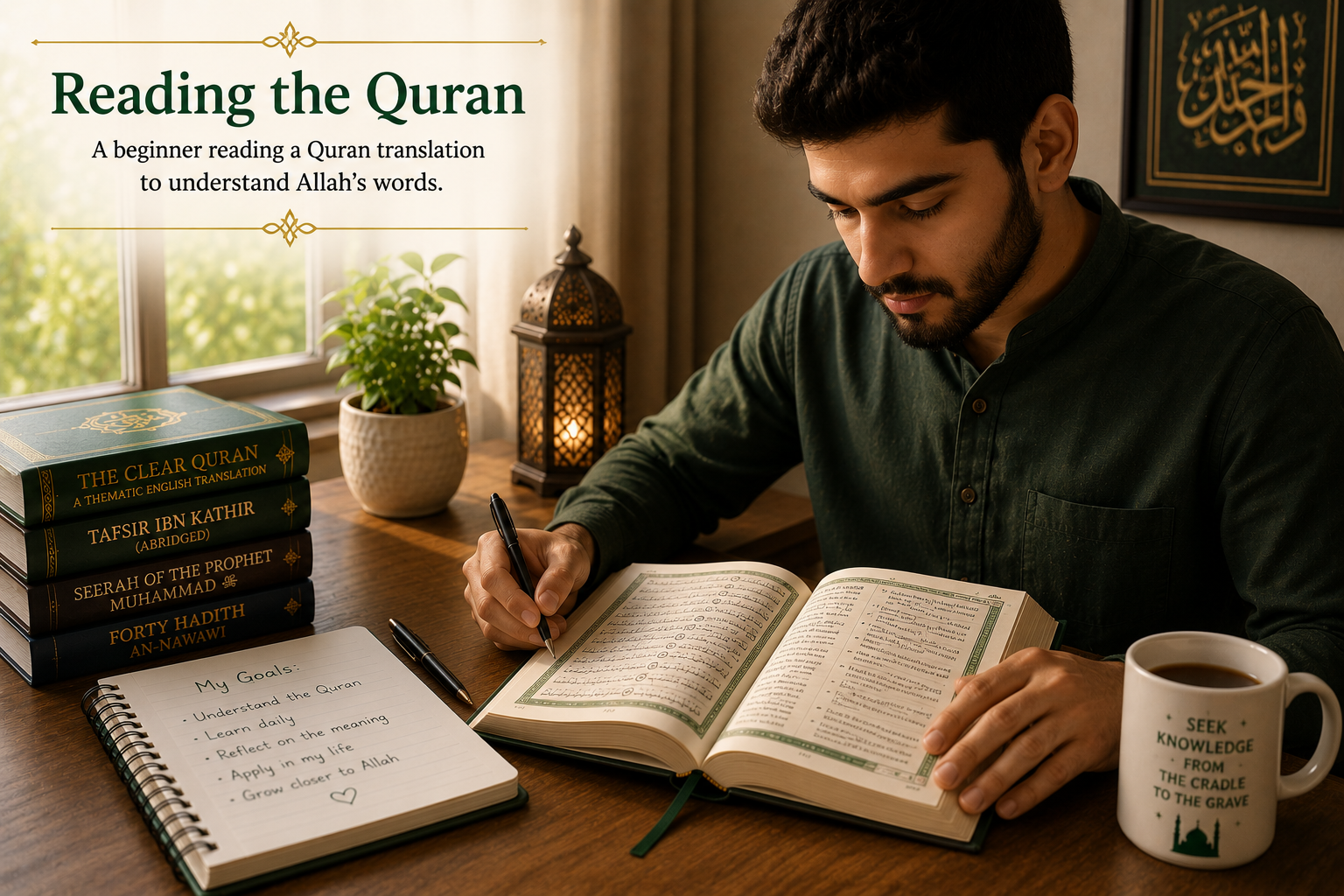
- Use a reputable translation with footnotes or commentary, since some verses benefit from context a bare translation won’t give you. “The Clear Quran” by Dr. Mustafa Khattab and the Saheeh International translation are both commonly recommended for readable, well-annotated English. Translations differ in wording, so when a verse is difficult, comparing a second translation or a reliable tafsir can help.
- You can read the Quran from beginning to end if that works for you. Many beginners, however, find it easier to begin with shorter chapters or use a thematic introduction alongside their reading.
- Read a little consistently rather than a lot occasionally — even one page a day builds real familiarity over months.
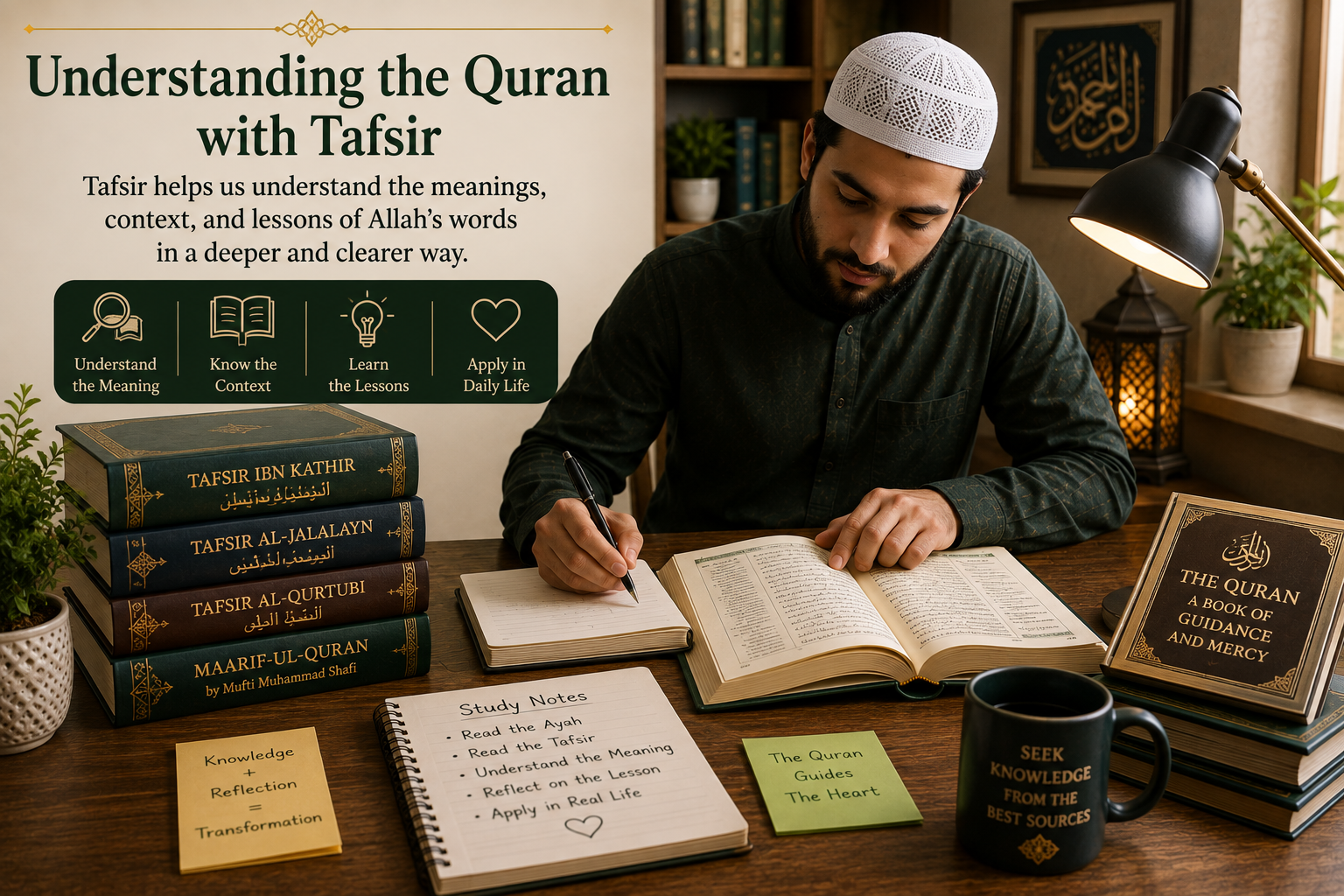
- Expect some verses to raise questions on first read. That’s normal — many verses were revealed in response to specific historical events, and commentary (tafsir) exists precisely to explain that context rather than leaving you to guess.
Our guides on how to read the Quran correctly and how to understand the Quran go deeper into both the practical and reflective sides of this.
Learning About the Prophet Muhammad ﷺ
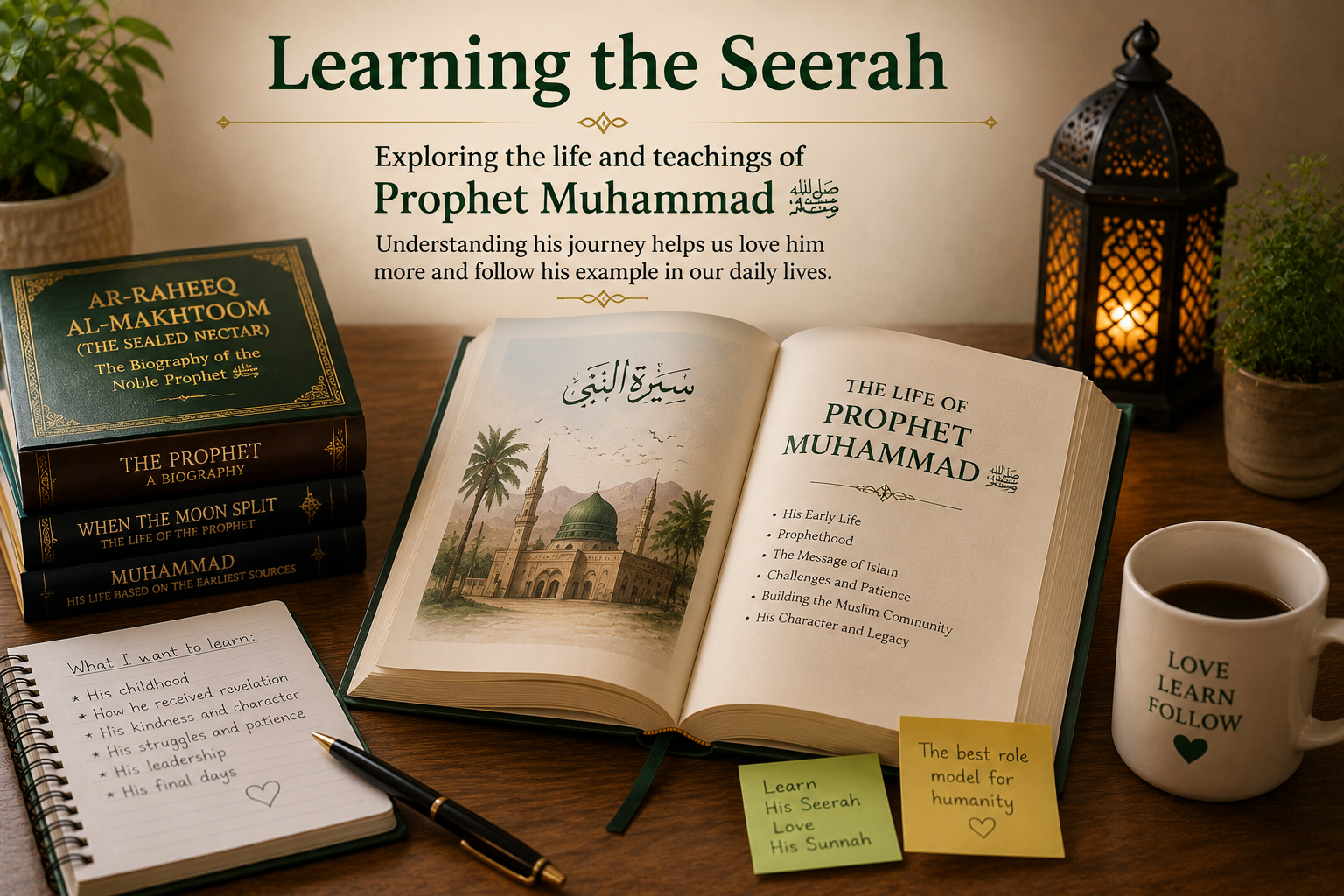
Understanding Islam without understanding the Prophet ﷺ is difficult — his life (the Seerah) is the practical demonstration of how Islamic belief is meant to be lived. Muslims regard him as the final messenger, described in the Quran as the “Seal of the Prophets” (Quran 33:40). You don’t need to memorize dates and battles to start; a general narrative overview of his life, character, and mission is enough for a beginner, with deeper study coming later if it interests you.
What tends to surprise newcomers most is how much ordinary daily conduct is covered in his example — honesty in trade, patience with difficult neighbors, kindness to family — alongside the historical events more commonly covered in summaries. If you were expecting mostly battles and dates, this part often changes how the whole subject feels.
The Prophet ﷺ said: “Whoever follows a path in pursuit of knowledge, Allah makes easy for him a path to Paradise.”
Trustworthy Sources & Avoiding Misinformation
Beginners often skip this part, and it usually shows later. Islam has a long tradition of scholarship, and not every account online reflects it accurately.
Be cautious with short-form social media content as your only source — it’s fine for quick answers, but algorithm-driven clips can flatten nuance or platform fringe views. Prefer established scholars, recognized Islamic organizations, translated primary texts (Quran, hadith collections), and books from known publishers over unverified accounts.
When a claim online surprises you or sounds extreme, a simple habit helps: check whether it’s attributed to an actual verse or authentic hadith with a real reference, or whether it’s presented without any source at all. Claims with no citation, or citations that don’t check out when you search them, are a good sign to keep looking instead of taking the claim at face value.
Before trusting an Islamic claim online, ask: Is there an actual Quran verse or authentic hadith behind it? Who explained it, and are they a recognized scholar? Is scholarly disagreement being left out? Is the quote shown with its original context? And is the source transparent about where its information comes from?
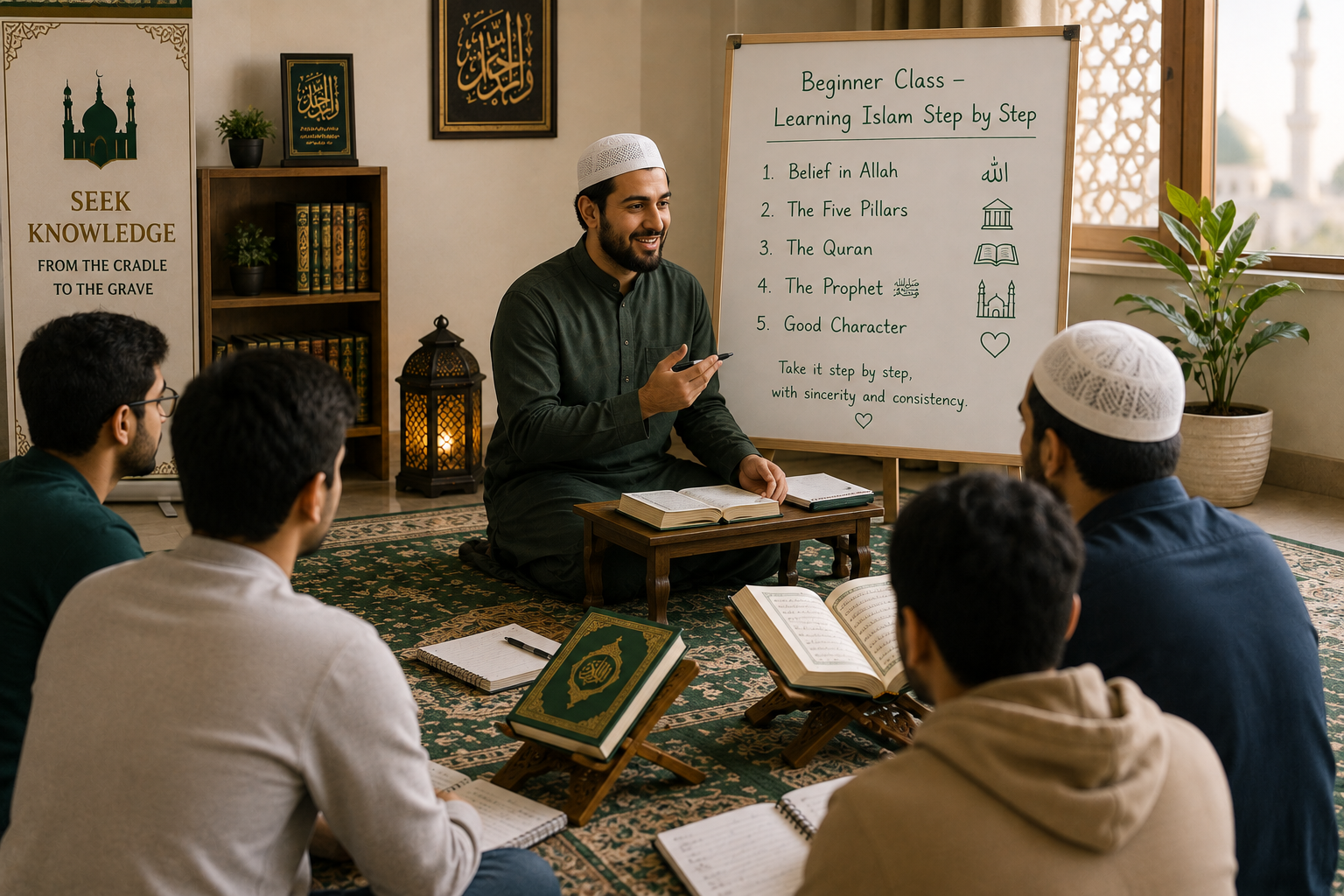
A local mosque or Islamic center is also worth considering. Many run free beginner classes and can point you toward vetted teachers and study circles nearby. If an in-person visit isn’t practical, several established Islamic organizations run structured online courses.
If You’re Not Muslim and Just Curious
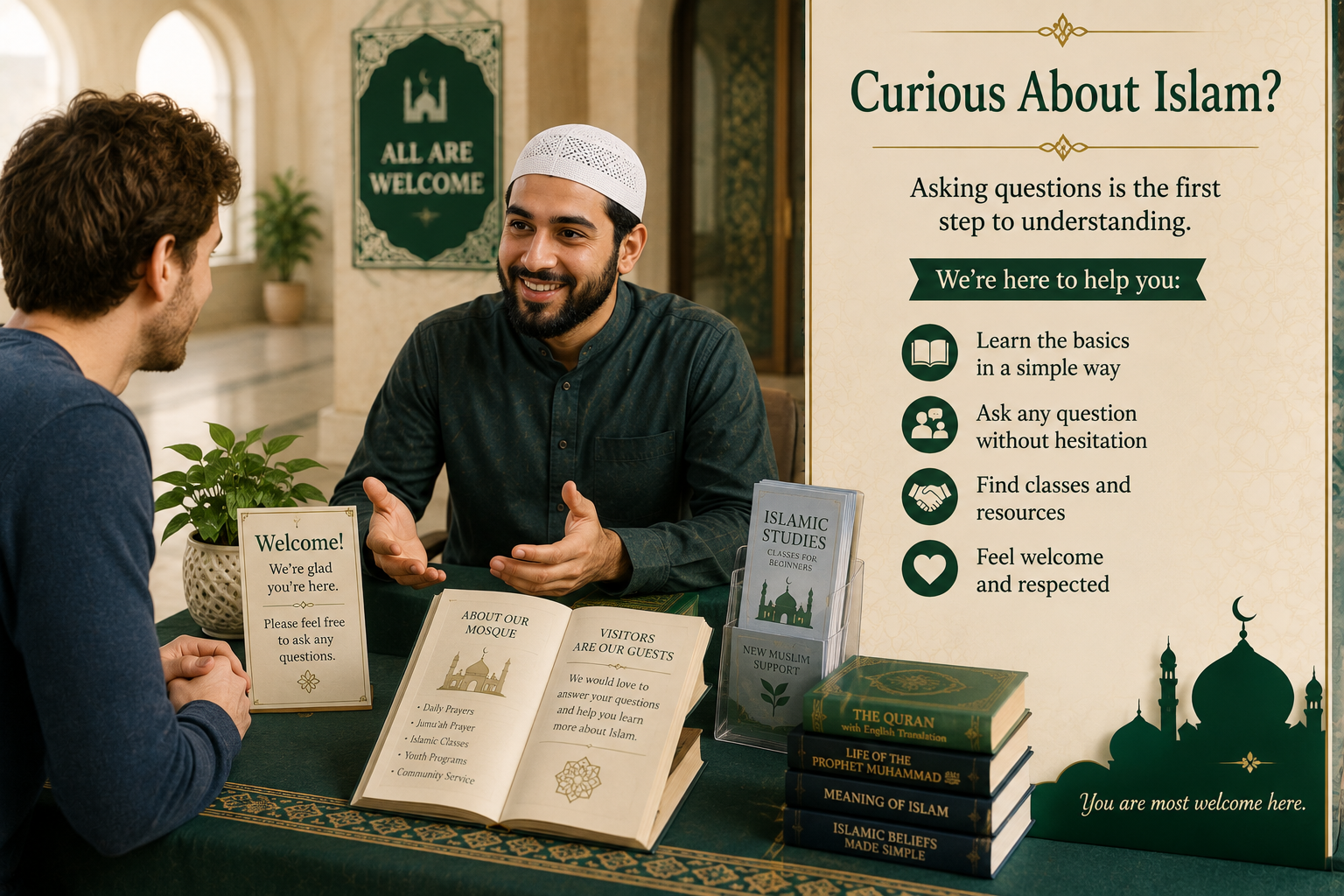
Maybe you’re here out of curiosity, academic interest, or personal reflection, with no decision to convert in mind. That’s a completely legitimate reason to be reading this. A coworker’s Eid celebration or a friend mentioning five daily prayers might have sparked genuine curiosity, not confusion. Approach the sources above at your own pace, ask questions of Muslims you know or a local mosque without pressure, and take as long as you need.
Sincere questions, even blunt ones, are rarely taken as hostile when asked in good faith. Being asked “why do you believe X” is a completely normal part of these conversations. If a conversation ever feels like it’s turning into pressure to convert, step back and continue your research elsewhere. If your reading eventually leads you toward wanting to accept Islam, our guide on how to become Muslim explains that step clearly, with no requirement to have everything figured out first.
If You’re a Muslim Deepening Your Knowledge
If you’re already Muslim, whether newly practicing or born into the faith, and looking to go deeper, the same foundation applies, just with more depth: study tafsir (Quranic exegesis) alongside translation, read biographies of the Prophet ﷺ in more detail, and look into structured courses instead of relying on self-study alone. It’s easy to feel like you should already know more than you do at this stage. That feeling doesn’t mean you’ve fallen behind. Even long-time students of Islamic scholarship still run into topics that surprise them.
A useful next step is picking one area that genuinely interests you — Islamic history, comparative fiqh between the schools of thought, Arabic language, or the lives of the companions — instead of trying to study everything with equal depth at once. Depth in one area tends to build more lasting understanding than a shallow pass over many. If you’re specifically in your first weeks as a new Muslim, our first 30 days guide lays out a practical daily structure alongside this learning path.
A Simple First-Month Study Plan
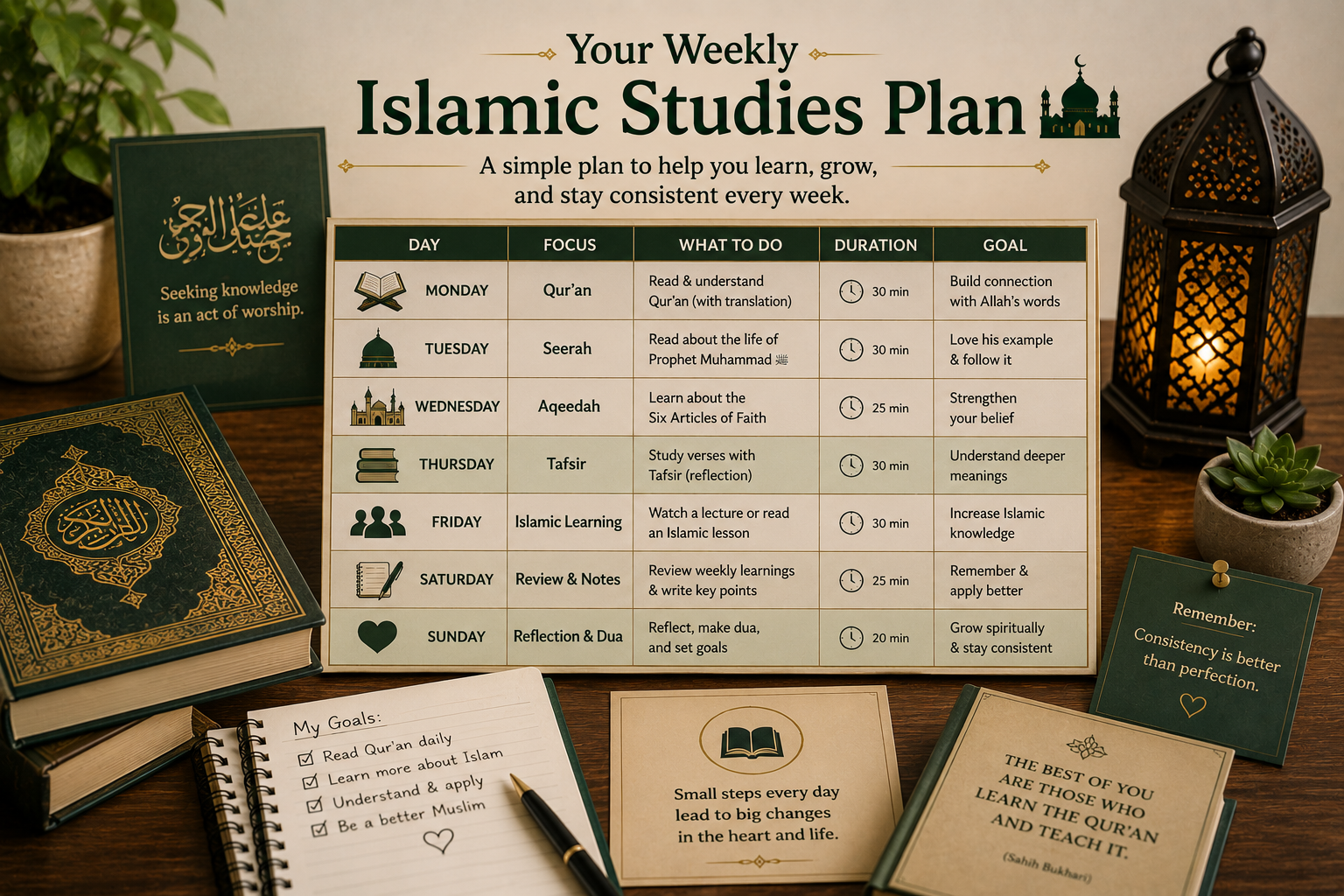
There’s no single required order, but if you want a starting structure, this is one reasonable way to spend your first month. Pacing yourself matters more than rushing through it:
- Week 1 — Read an overview of the Six Articles of Faith and Five Pillars; skim a short, reputable overview of the Prophet’s ﷺ life.
- Week 2 — Begin reading the Quran in translation, a few pages at a time, starting with shorter chapters if that helps.
- Week 3 — Explore one topic in more depth based on your own questions — prayer, the afterlife, women in Islam, whatever you’re most curious about — from a reputable source.
- Week 4 — If possible, visit a local mosque or Islamic center, or join an online beginner class, to ask questions directly.
By the end of the month, you won’t know everything. Nobody expects that. But you’ll have a real framework to keep building on instead of a scattered pile of disconnected facts.
Common Mistakes
Content built around arguing against other faiths teaches little about Islam itself. Primary sources and calm teaching explain far more than a debate format ever will.
Individual influencers, however popular or confident-sounding, can get things wrong — cross-check surprising claims against established scholarship before accepting them.
Rushing usually means retaining very little. If you finish a chapter and can’t remember what it was about, that’s a sign to slow down, not a sign you’re behind schedule.
Practices make far more sense once the belief behind them is understood first.
Books and videos can’t clarify your specific confusion the way a knowledgeable teacher can.
Frequently Asked Questions
Where should a total beginner start learning about Islam? +
Start with the Six Articles of Faith and Five Pillars for a basic framework, then begin reading the Quran in a reliable translation.
Do I need to know Arabic to learn about Islam? +
No. Reliable translations let you understand the Quran’s message without Arabic — though learning it later deepens understanding further.
What’s the best book for beginners learning about Islam? +
There’s no single “best” book — a well-rounded starting shelf usually includes a translated Quran with commentary, a beginner-level Seerah overview, and a general introduction to Islamic beliefs. Titles like “The Heart of Islam” by Seyyed Hossein Nasr are commonly recommended, but a local teacher or mosque can point you toward options suited to your background.
Is it okay to learn about Islam without intending to convert? +
Yes. Learning about Islam out of curiosity, academic interest, or personal reflection carries no obligation whatsoever, and many introductory Islamic resources are designed to help readers begin with exactly this kind of question.
How do I know if an online source about Islam is reliable? +
Prefer established scholars, recognized Islamic organizations, and translated primary texts over unverified social media accounts, and cross-check surprising claims.
How long does it take to properly understand Islam? +
You can build a useful foundation through consistent study, but how long that takes varies from person to person. Islamic learning itself is considered a lifelong process, even for Muslims born into the faith.
Should I visit a mosque while I’m still just learning?
Many mosques welcome visitors, although arrangements vary. If you’re unsure, contact the mosque beforehand and ask about visiting or attending a beginner class.
What’s the difference between learning about Islam and becoming Muslim? +
Learning about Islam is informational and carries no commitment; becoming Muslim is a declaration of belief (the Shahada) — you can do the former without ever doing the latter.
What order should I learn Islamic topics in? +
Belief before practice, and practice before deeper study: start with the six articles of faith, then the five pillars, then the Quran and Seerah, then daily worship like Salah, and finally more advanced topics like tafsir and fiqh once the basics feel solid.
Can I learn about Islam entirely online, or do I need to go somewhere in person? +
Online resources cover most of the basics, but an in-person or live connection with a mosque, class, or teacher tends to answer specific questions faster and more accurately than self-study alone.
- Read a short overview of the Six Articles of Faith and Five Pillars (see the roadmap above).
- Open a reliable Quran translation and read one short chapter.
- Write down one question you have, and bring it to a local mosque, teacher, or trusted resource this week.
How to learn Islam properly comes down to starting with belief, reading the Quran consistently instead of rushing it, learning about the Prophet ﷺ, and leaning on trustworthy sources over algorithm-driven content. There’s no deadline on any of it. Steady, honest learning holds up far better than trying to absorb everything at once.
Sources
- Quran 96:1 — Surah Al-Alaq, the first revelation, on reading/seeking knowledge (quran.com/96/1)
- Sahih al-Bukhari 50 / Sahih Muslim 8, Book of Faith — the Hadith of Jibril, on the six articles of iman (sunnah.com/bukhari:50)
- Sahih al-Bukhari 8 / Sahih Muslim 16 — hadith on Islam being built upon five pillars (sunnah.com/bukhari:8)
- Quran 33:40 — Surah Al-Ahzab, on Muhammad ﷺ as the Messenger of Allah and Seal of the Prophets (quran.com/33/40)
- Sahih Muslim 2699 — hadith on seeking knowledge easing one’s path to Paradise (sunnah.com/muslim:2699)
The religious claims directly sourced above are: the six articles of faith, the five pillars, the first Quranic revelation, the Prophet ﷺ as the final messenger, and the virtue of seeking knowledge. Other content — recommended translations, study order, mosque etiquette, and the broader meaning of terms like jihad — reflects general practical guidance and interpretations commonly presented in established Islamic scholarship; specific issues can vary by school, scholar, and context. Readers are encouraged to consult a knowledgeable local teacher or mosque for personalized guidance.
Ready to Go Deeper?
Once you’ve got the basics down, explore what Islam teaches about Allah in more depth.
What Does Islam Teach About Allah? →Last updated: August 2026
Sources: Quran and authentic hadith collections (see Sources section above)
Found an error? Contact IslamicEduHub