
How to Perform Ghusl Correctly: Complete Step-by-Step Guide for Men and Women
When Ghusl becomes obligatory, the correct niyyah, the faraid you can’t skip, the full Sunnah method step by step, and the differences men and women need to know — everything covered in one place, without vague or contradictory advice.
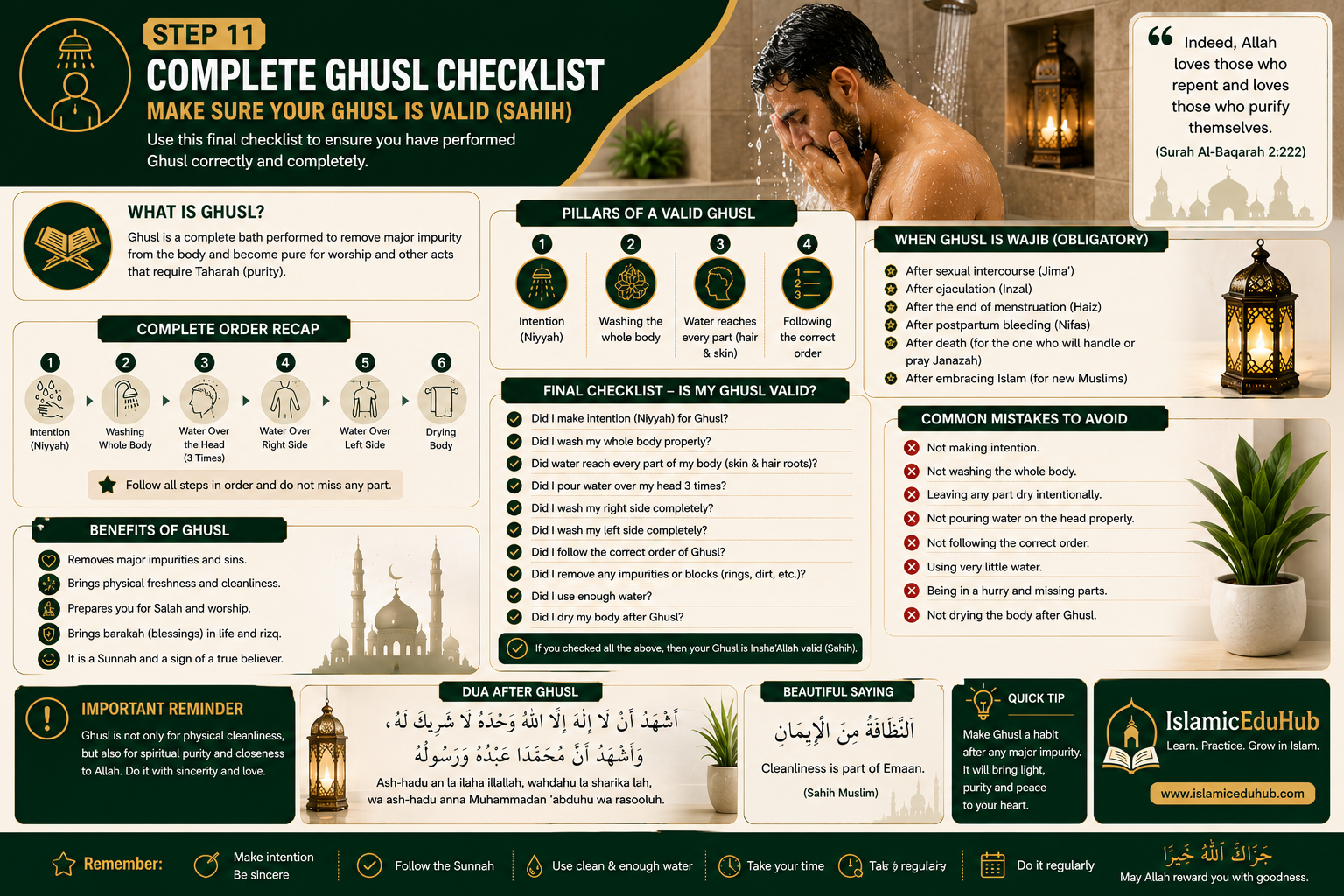
Here’s how to perform Ghusl correctly in short: Ghusl is performed by making the intention (niyyah), washing both hands, washing away any impurity, performing a complete wudu, then pouring water over the head three times followed by the right side and then the left side of the body until every part is thoroughly wet. It becomes obligatory after janabah, at the end of menstruation or postpartum bleeding, and in a few other specific situations covered below.
In This Guide
- What Is Ghusl and Why It Matters
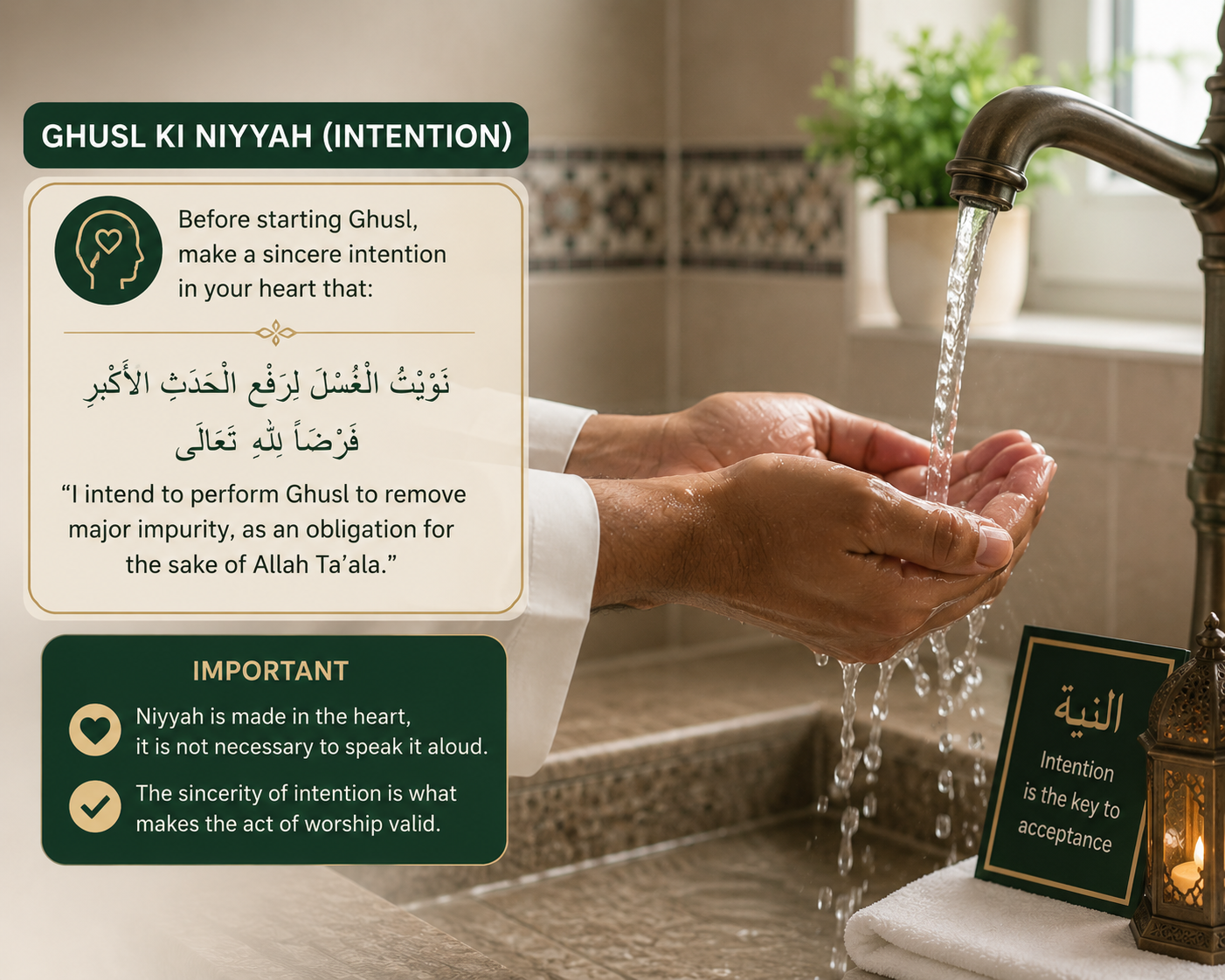
- When Ghusl Becomes Obligatory (Farz)
- Ghusl Ki Niyyah — Making the Intention
- The Faraid (Obligatory Acts) of Ghusl
- How to Perform Ghusl Correctly: The Full Sunnah Method
- Rulings Specific to Men and Women
- Common Mistakes People Make During Ghusl
- Practical Tips and a Simple Checklist
- Quran and Hadith on Purification
- People Also Ask
- Ghusl FAQ
- References
Knowing how to perform Ghusl correctly is something most Muslims learn only once, quickly, often from a parent in a hurried five-minute explanation — and then just repeat whatever they remember for the rest of their lives, unsure if a step was ever missed. That gap between “roughly right” and “correctly performed, with confidence” is exactly what this guide is meant to close.
Unlike Wudu, which most people perform multiple times a day and get plenty of practice with, Ghusl happens less often — which is exactly why doubts creep in. Did the water reach the roots of the hair? Was the niyyah made before or does it matter? Are the steps different for men and women? This guide answers each of those directly, with the obligatory acts (faraid) clearly separated from the Sunnah method, so you know exactly what’s required and what strengthens the act further.
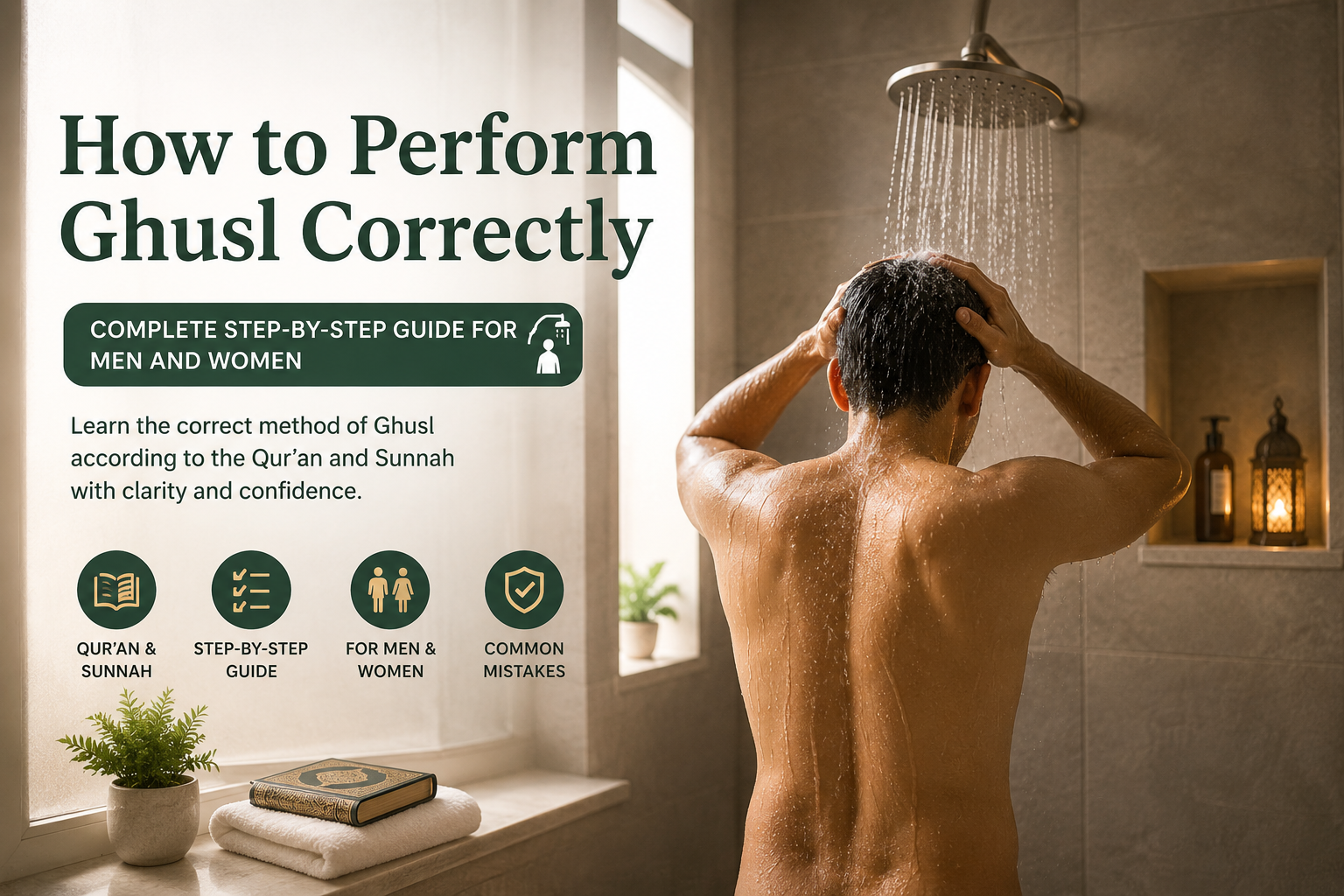
What Is Ghusl and Why It Matters
Ghusl is the ritual bath that removes major ritual impurity (hadath akbar) and is a precondition for prayer, touching the Mus’haf, and other acts of worship in situations where it applies. It’s more thorough than Wudu — every part of the body, including the hair roots and skin underneath, needs to be reached by water, not just the specific limbs washed in Wudu.
Getting Ghusl right isn’t about ritual for its own sake. Prayer performed without a valid Ghusl, when one is due, isn’t accepted — so this isn’t a minor detail to get approximately right. It’s worth taking the ten extra minutes to do it properly rather than rushing through it half-remembered.
Many Muslims only realize they are unsure about Ghusl when they search online after hearing different opinions from family or friends. Learning how to perform Ghusl correctly once can remove years of confusion and give peace of mind before every prayer.
When Ghusl Becomes Obligatory (Farz)
Ghusl becomes obligatory in several specific situations, and knowing how to perform Ghusl correctly starts with knowing exactly which one applies to you — it helps remove the guesswork that a lot of people carry around silently.
Sexual discharge or intercourse
Ghusl is obligatory after sexual intercourse (whether or not discharge occurs) and after any sexual discharge, including during sleep (wet dreams), for both men and women.
Haidh
Once a woman’s menstrual bleeding has fully stopped, Ghusl is obligatory before she can pray, fast, or resume other acts that require purification.
Nifas
The same principle applies after postpartum bleeding ends — Ghusl is obligatory before resuming prayer and related acts of worship.
Embracing Islam, and more
Many scholars hold that Ghusl is recommended upon accepting Islam. Ghusl before Jumu’ah and before Eid prayer is a confirmed Sunnah, not obligatory, but strongly encouraged.
If you’ve ever wondered, “Do I really need Ghusl in this situation?” you’re not alone. These questions are extremely common, especially for teenagers and new Muslims. Taking a few minutes to learn the rulings now can prevent unnecessary doubts later.
Ghusl Ki Niyyah — Making the Intention
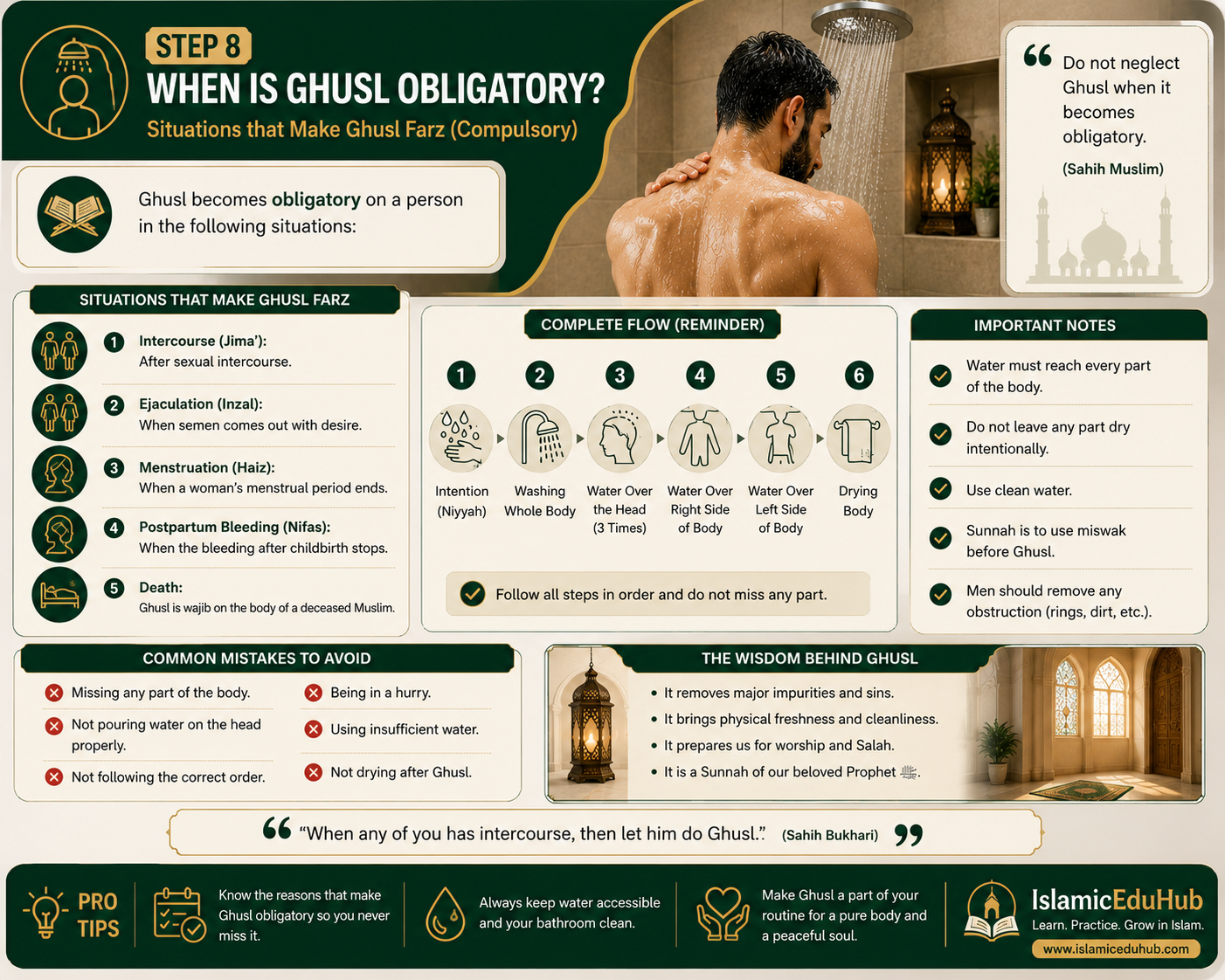
The niyyah for Ghusl doesn’t need to be spoken aloud — it’s a decision made in the heart, before beginning, that this bath is being performed to remove major impurity and become pure for worship. Saying it in words isn’t a requirement, though some people find it helps focus the mind before starting.
A simple, sincere intention is enough: recognizing that this Ghusl is being done to fulfill the obligation of purification. There’s no specific wording that must be used — the sincerity of the intention matters more than the phrase itself.
A lot of people ask whether stepping into the shower already thinking “I need to wash off before Fajr” counts as a niyyah, or whether it needs to be a separate, deliberate thought. In practice, if the purpose in your mind at that moment is purification, that’s enough — there’s no need to pause and formally announce it to yourself before turning on the water. This is part of what it means to know how to perform Ghusl correctly without overcomplicating it.
The Faraid (Obligatory Acts) of Ghusl
Scholars across the major schools of thought largely agree on a small set of acts that make Ghusl valid. Miss one of these, and the Ghusl doesn’t count — everything else beyond this list strengthens the act but isn’t strictly required for validity. These are the non-negotiables of how to perform Ghusl correctly.
| Obligatory Act (Fard) | What It Means in Practice |
|---|---|
| Niyyah (Intention) | A sincere intention in the heart to perform Ghusl for purification, made before or at the start of washing |
| Rinsing the mouth | Water must reach every part of the inside of the mouth (required in the Hanafi school; recommended, not obligatory, in some others) |
| Rinsing the nose | Water must reach the soft part inside the nostrils (same variation as above across schools) |
| Water covering the entire body | Every part of the skin and every strand of hair, including its roots, must be reached by water — no dry patches left |
Because a few of these details differ slightly between schools of fiqh (particularly mouth and nose rinsing), it’s worth confirming which school your local scholar follows if you want to be precise about the exact fara’id — but covering the entire body with water, without exception, is agreed upon by all.
How to Perform Ghusl Correctly: The Full Sunnah Method
This is the complete method for how to perform Ghusl correctly, as taught in the authentic Sunnah — following it in order isn’t obligatory, but it’s the most thorough and recommended way to perform Ghusl.
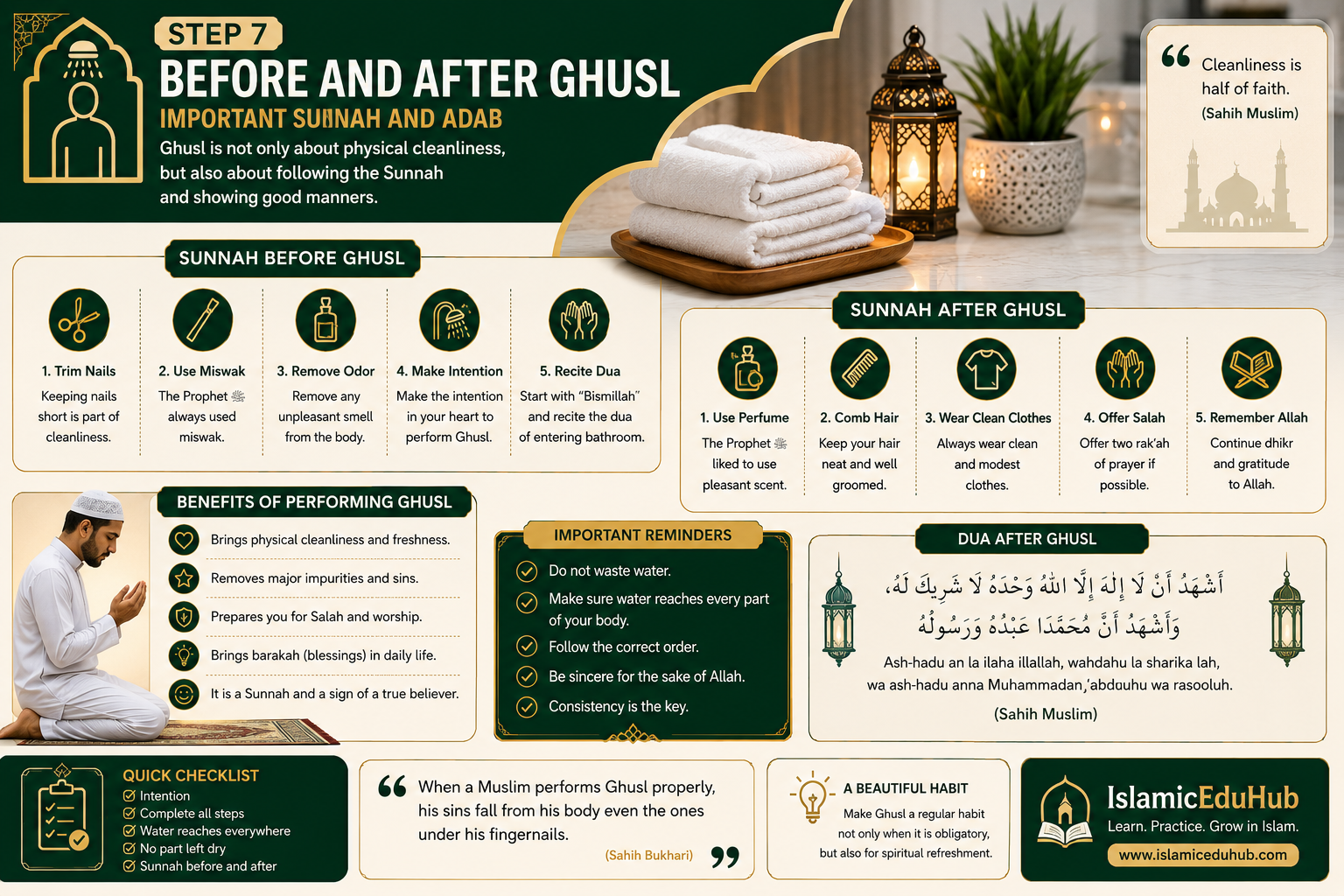
- Make the niyyah. Silently intend in your heart that this Ghusl is to remove major impurity.
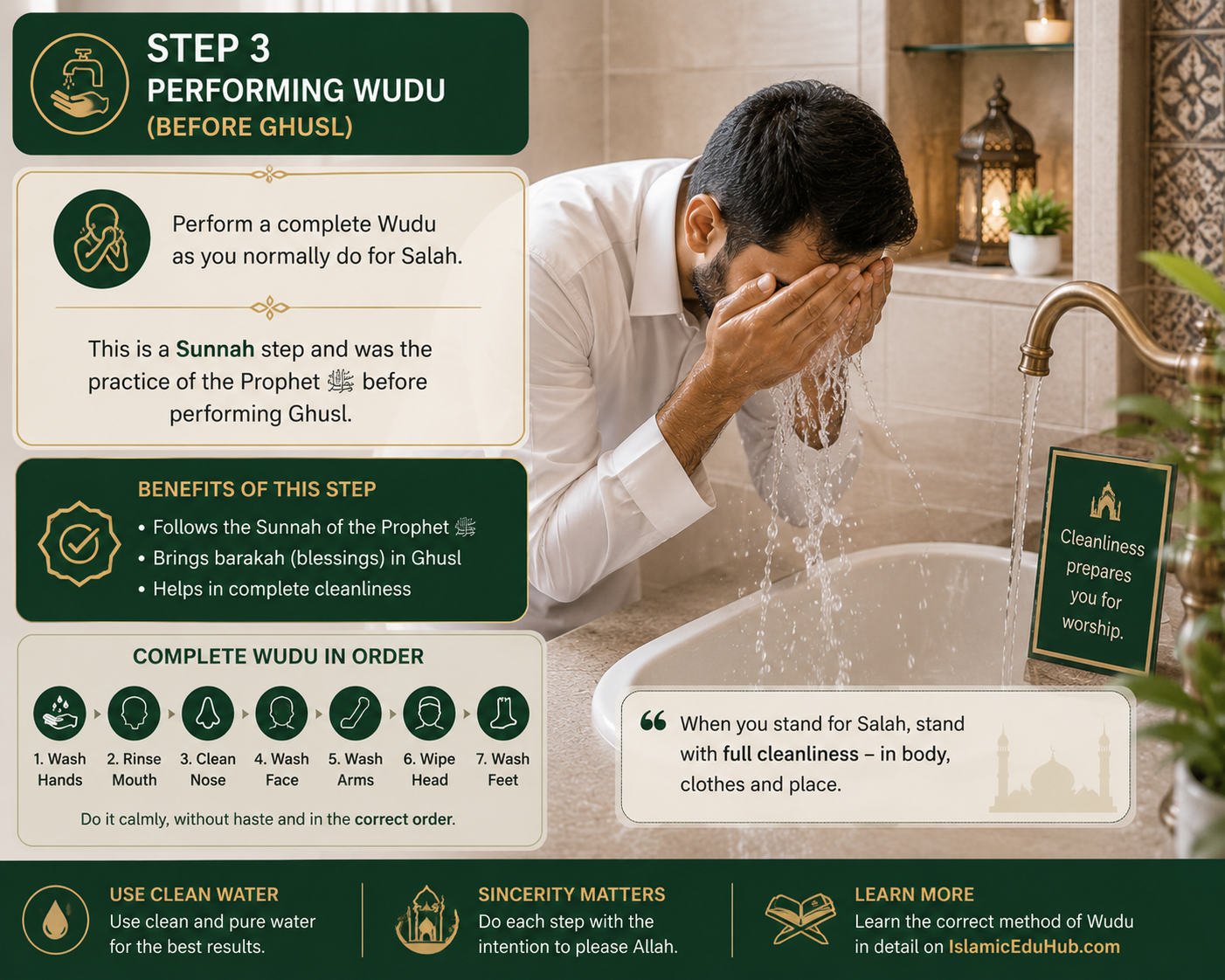
- Say Bismillah and wash both hands up to the wrists, three times.
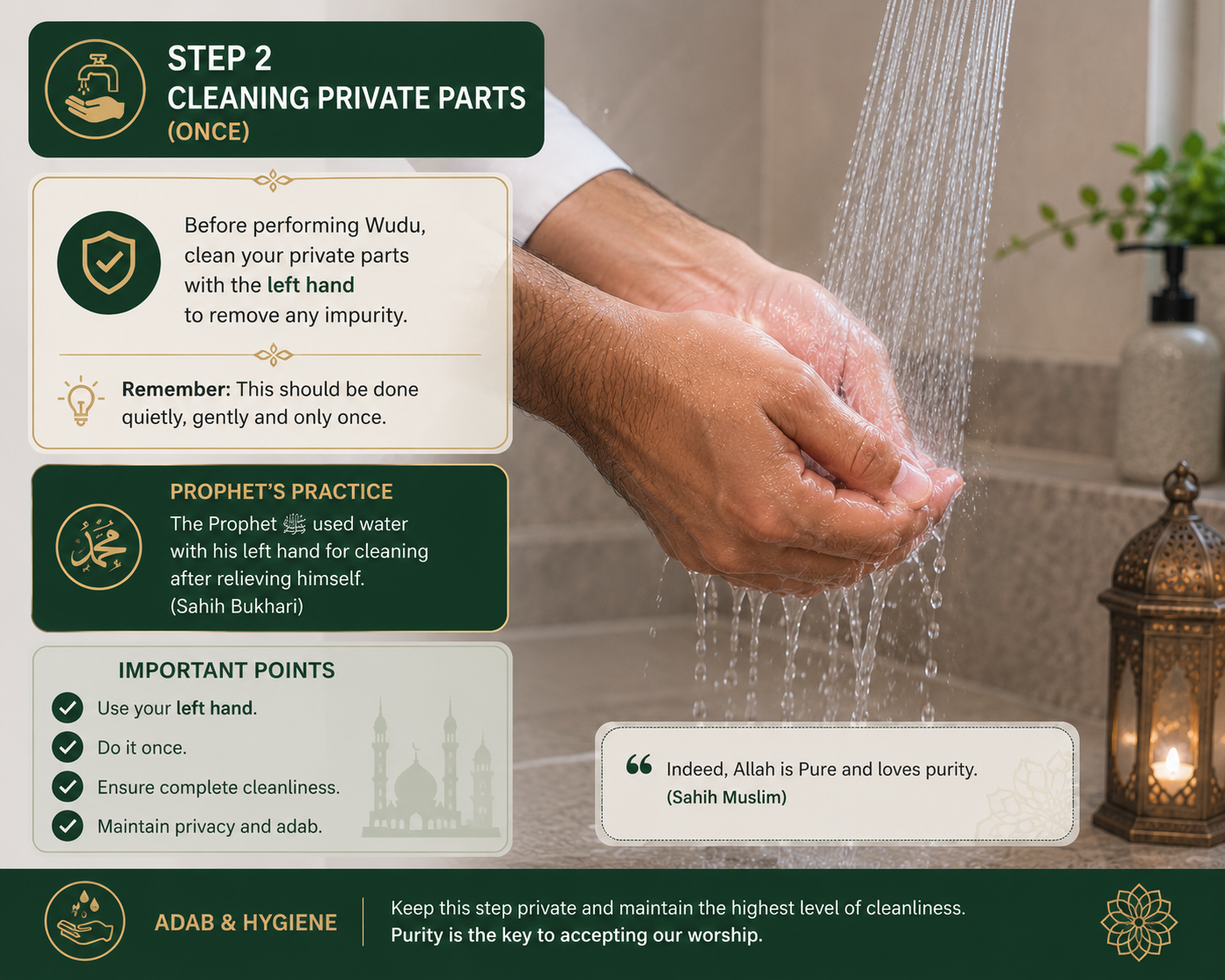
- Wash away any impurity on the body, particularly the private area, using the left hand.
- Perform a complete Wudu as you would before prayer, though delaying the feet until the end of the Ghusl is a well-known Sunnah practice if standing in water.
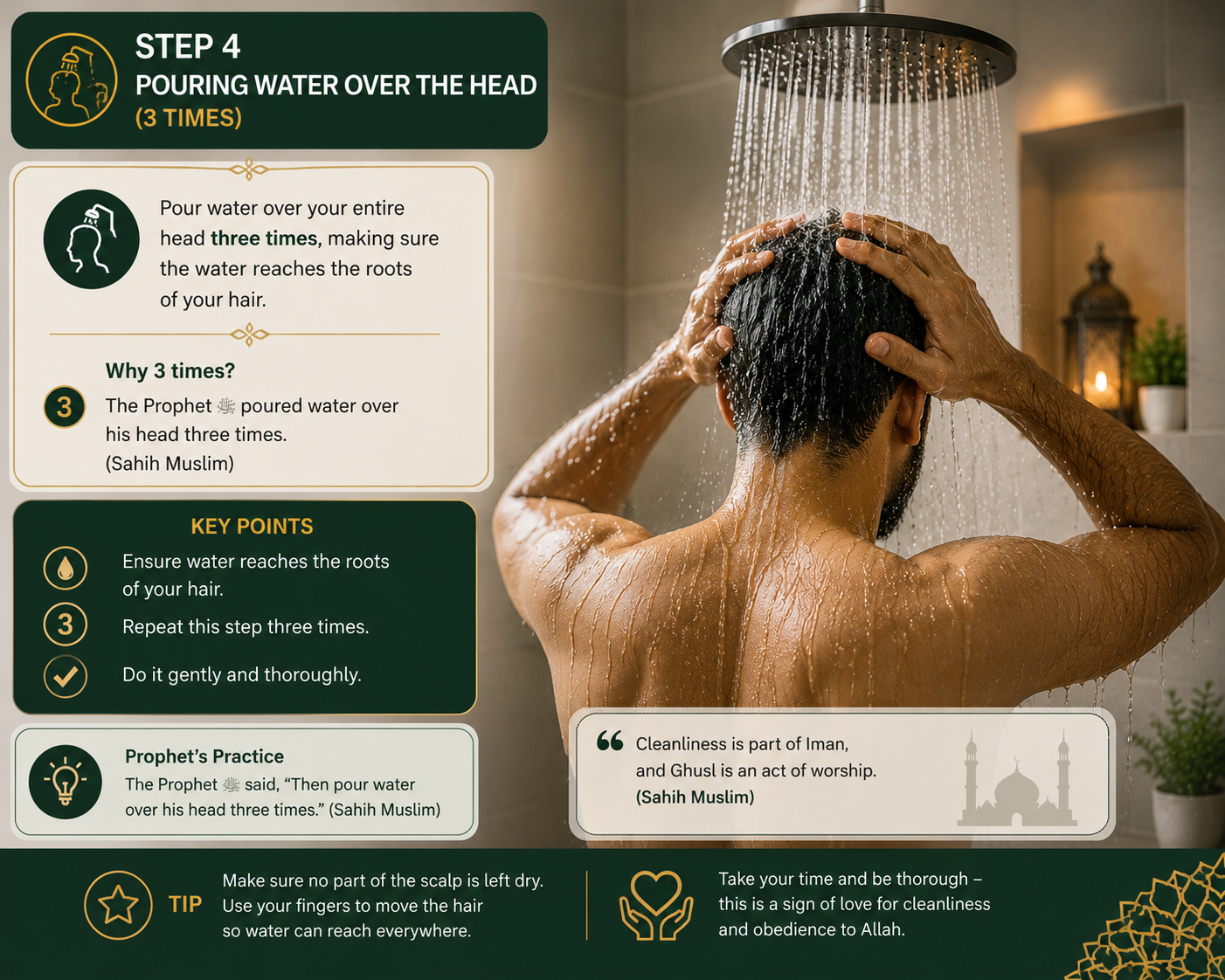
- Pour water over the head three times, working it through to the roots of the hair with the fingers so no dry patch is left underneath.
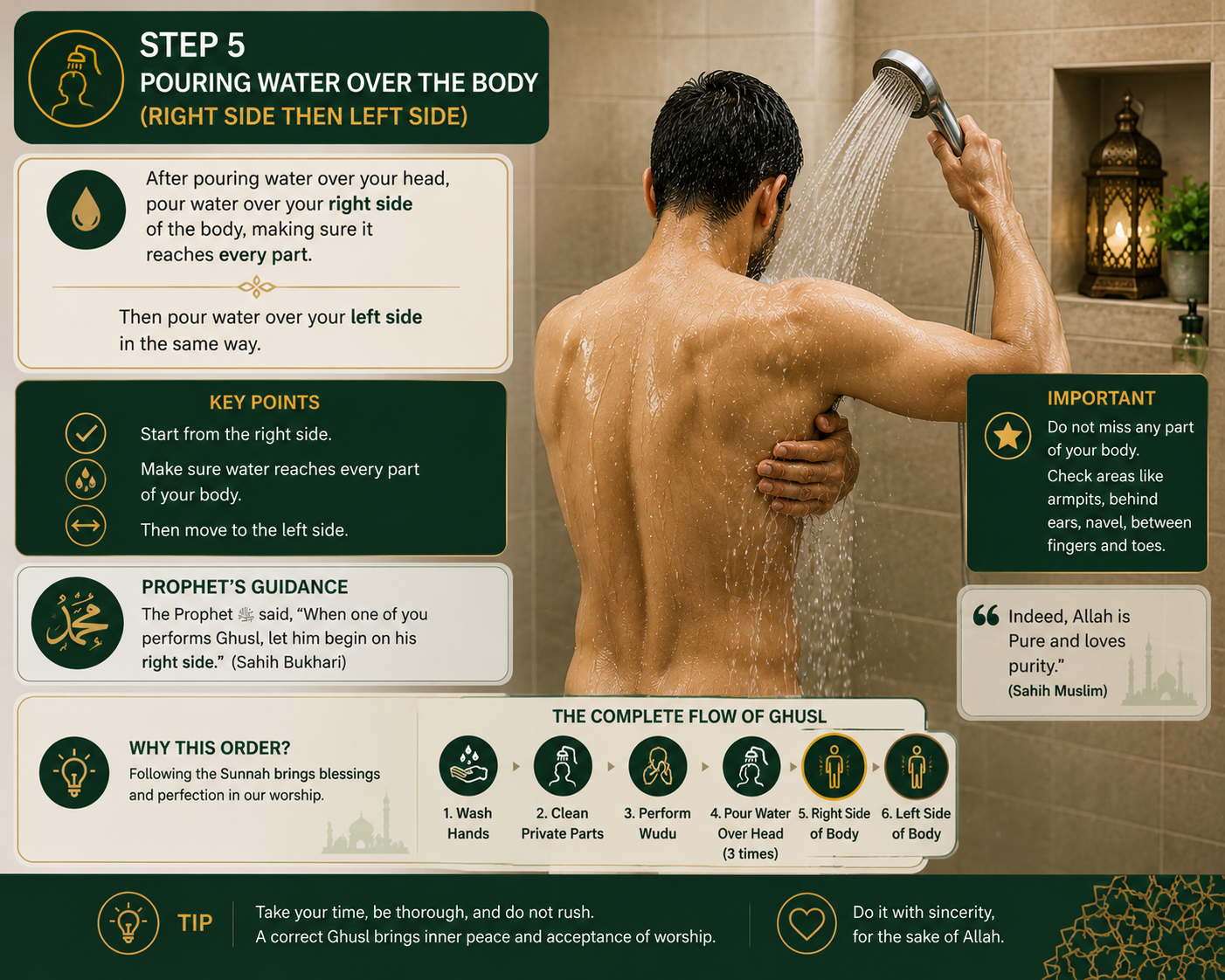
- Pour water over the right side of the body from shoulder to foot, then the left side, making sure water reaches every part — underarms, navel, behind the ears, between the toes.
- Wash the feet if they weren’t included during the Wudu step earlier.
Rulings Specific to Men and Women
Ghusl is fundamentally the same act for men and women — how to perform Ghusl correctly doesn’t change by gender — but a few details differ and are worth knowing clearly rather than guessing at.
Hair and braids
Loosening tightly braided hair fully isn’t required for Ghusl after menstruation or nifas, as long as water reaches the roots — most scholars hold this based on the hadith of Umm Salamah. For Ghusl after janabah specifically, some scholars are stricter about ensuring water reaches every root.
Beard and body hair
Water must reach the skin underneath a beard or any body hair, not just wet the surface of the hair itself — running the fingers through facial and body hair while pouring water helps ensure this.
Beyond these details, the obligatory acts, the niyyah, and the overall method are identical for men and women — there isn’t a fundamentally different set of steps for each.
This is one of the questions that comes up often in family group chats and among friends — someone with long, thick hair worrying whether they’ll ever get it fully “done” for Ghusl. The reassurance is simple: it’s about water reaching the scalp and roots, not about how long the process takes or how the hair looks afterward.
Common Mistakes People Make During Ghusl
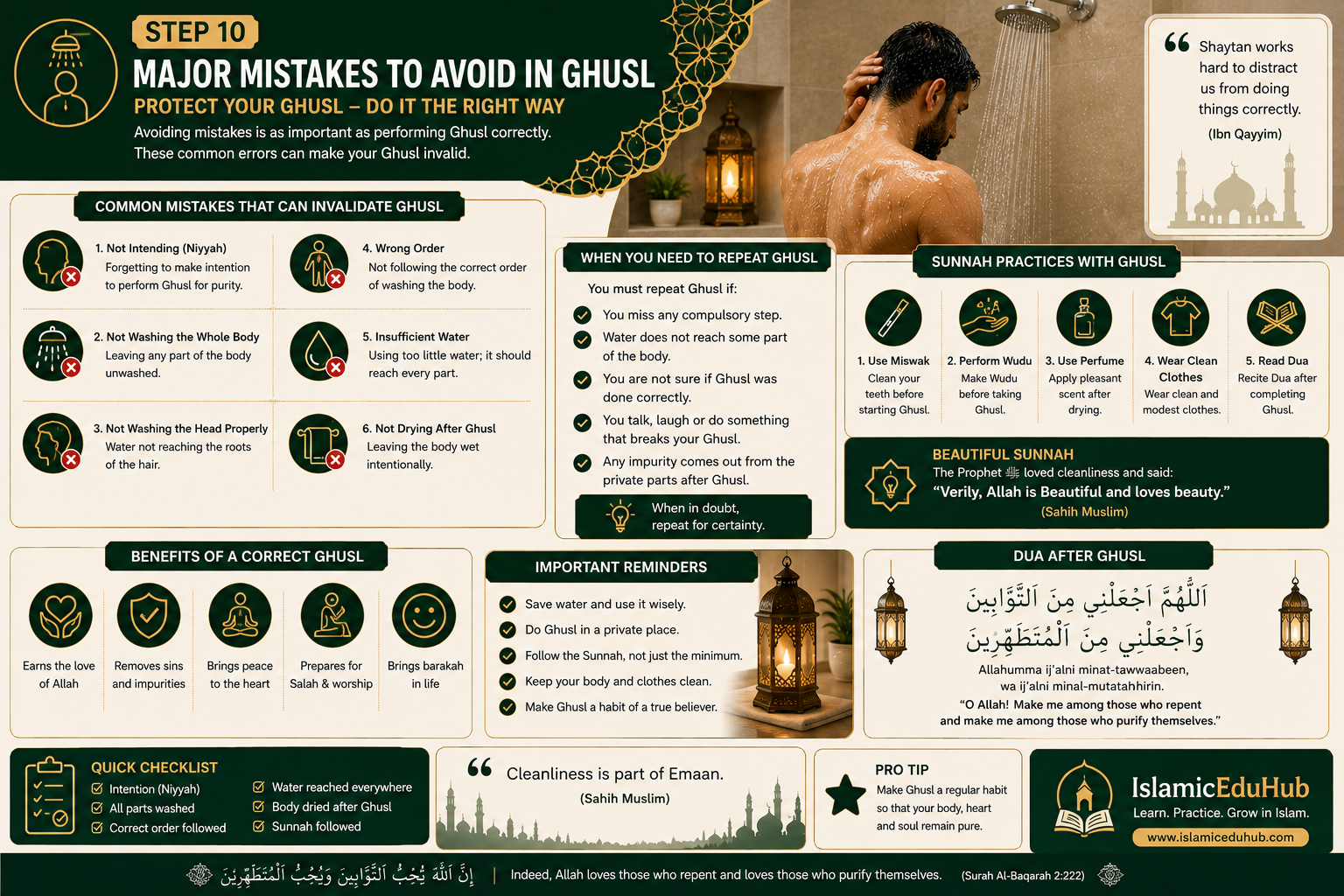
These are the mistakes that most often stand between someone and how to perform Ghusl correctly:
- Rushing through wet hair. Wet hair on the surface doesn’t mean water reached the roots — this is the single most common reason a Ghusl ends up incomplete without the person realizing it.
- Skipping the niyyah entirely. Getting in the shower out of habit, without ever forming the intention, means the act performed isn’t a valid Ghusl even if the body gets thoroughly wet.
- Missing behind the ears, the navel, and between the toes. These small areas are the most commonly missed spots, especially when someone is rushing before Fajr or before work.
- Applying oil or product that blocks water before Ghusl, without realizing it can prevent water from reaching the skin or hair roots underneath.
- Assuming a regular shower counts automatically. A shower can fulfill Ghusl if the niyyah is made and every part is reached, but a shower taken purely out of habit, with the mind elsewhere, often misses the intention altogether.
Remember, Islam is a religion of ease, not hardship. The goal is not to become obsessed with doubts but to perform Ghusl carefully, with sincerity, and then move forward with confidence. Avoiding these mistakes is really what it means to learn how to perform Ghusl correctly the first time, rather than having to relearn it years later.
Want the Fundamentals of Purification Covered?
Ghusl and Wudu work together as the foundation of Taharah — if Wudu still feels uncertain, start there.
Read the Wudu GuidePractical Tips and a Simple Checklist
These practical tips make it easier to remember how to perform Ghusl correctly every time, without needing to think through the whole method from scratch:
- Work top to bottom, one side at a time. Head first, then right side, then left side — it’s far easier to avoid missing a spot with a consistent order.
- Run fingers through hair and beard while pouring water, rather than just letting water run over the surface.
- Remove tight jewellery or anything that could block water from reaching the skin underneath, such as tight rings.
- Keep the water running a few extra seconds over commonly missed areas — behind the ears, the navel, and between the toes.
- If in doubt about whether Ghusl was completed correctly, it’s always safer to repeat it than to pray without confidence that purification was valid.
Quran and Hadith on Purification
The obligation and importance of Ghusl aren’t based on cultural habit — they’re rooted directly in the Quran and authentic Sunnah. For anyone who wants to read these verses and hadith in their original context rather than taking them at face value here, Quran.com and Sunnah.com are good places to look them up directly.
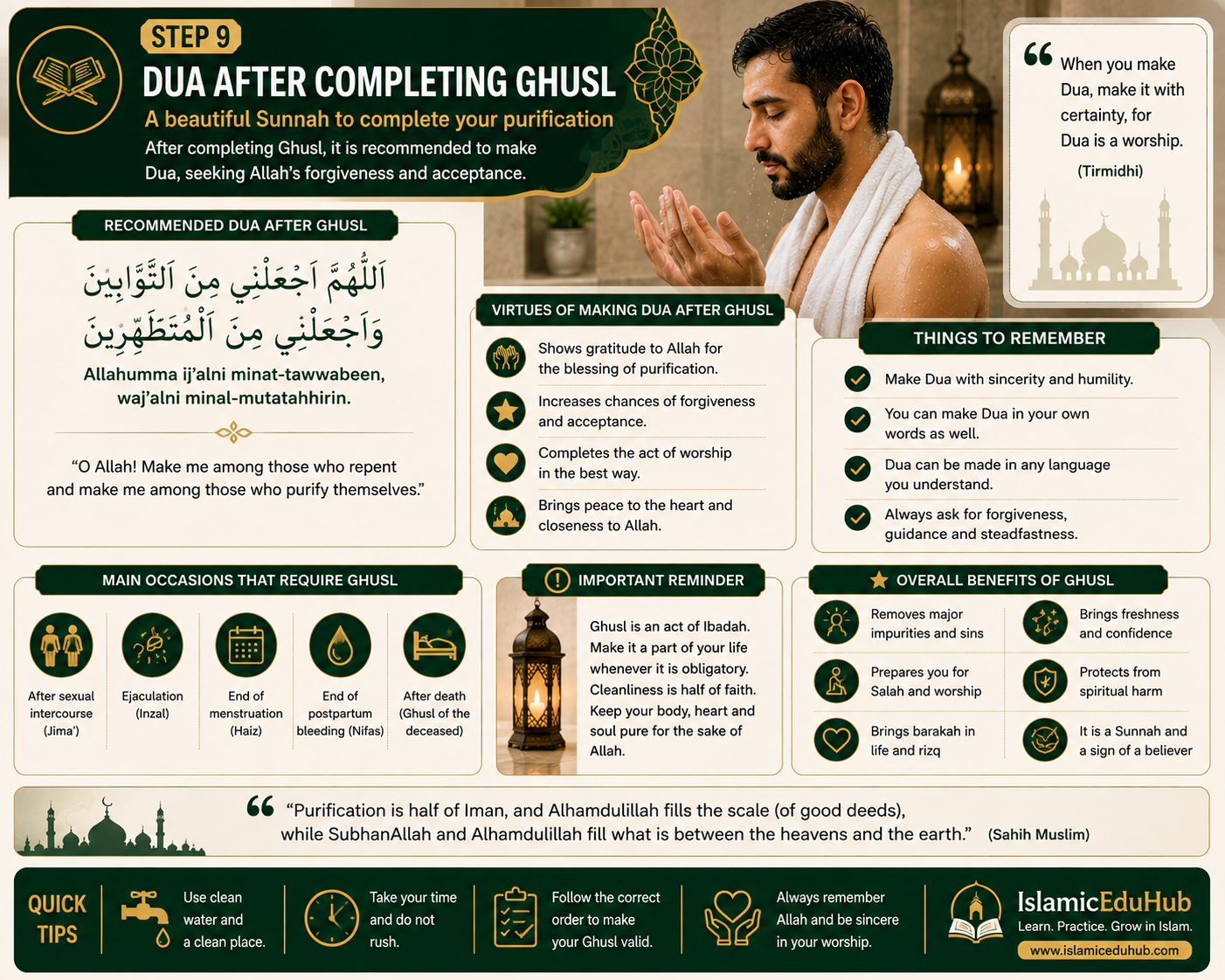
“And if you are in a state of janabah, then purify yourselves.” — Surah Al-Ma’idah, 5:6
On Reaching Every Part of the Body
Aisha (may Allah be pleased with her) described how the Prophet ﷺ would begin Ghusl by washing his hands, then pour water over his head and body, ensuring every part was reached — a description scholars have relied on for centuries in outlining the Sunnah method.
“Indeed, Allah loves those who turn to Him in repentance and loves those who purify themselves.” — Surah Al-Baqarah, 2:222
These references are why Ghusl isn’t treated as a minor formality in Islamic practice — purification is directly tied to a believer’s readiness to stand before Allah in prayer, which is exactly why knowing how to perform Ghusl correctly matters.
People Also Ask
This is one of the most common questions people have about how to perform Ghusl correctly. Yes, as long as the niyyah is made and water reaches every part of the body, including hair roots — the water source or setting doesn’t matter, only whether the intention and coverage are met.
Ghusl before Jumu’ah is a strongly confirmed Sunnah, not an obligation — many scholars encourage it heavily given the authentic hadith recommending it, but skipping it doesn’t invalidate the Friday prayer.
No — a properly performed Ghusl that includes a complete Wudu within it already covers what’s needed for prayer, as long as nothing that breaks Wudu happens afterward.
Ghusl FAQ
How do I perform Ghusl after Janabah?
The method is the same as described in this guide’s step-by-step section on how to perform Ghusl correctly: niyyah, washing the hands, washing away impurity, a complete Wudu, then pouring water over the head three times followed by the right and left sides of the body.
Can I perform Ghusl with cold water if hot water isn’t available?
Yes — water temperature has no bearing on the validity of Ghusl. What matters is that clean water reaches every part of the body along with a valid niyyah.
Is speaking during Ghusl disliked?
Many scholars consider unnecessary talking during Ghusl disliked (makruh) out of respect for the act of purification, though it doesn’t invalidate the Ghusl itself.
What should a woman do if her hair is in tight braids during her Ghusl after menstruation?
Based on the hadith of Umm Salamah, most scholars hold that fully undoing tight braids isn’t required after menstruation or nifas as long as water reaches the roots of the hair when poured.
Does swimming in a pool or sea count as Ghusl?
It can, provided the niyyah is made before or during the swim and the person is confident every part of the body, including hair roots, was reached by the water.
How is Ghusl for men and women different?
The core method, faraid, and niyyah are identical. The main practical difference is around hair — women aren’t required to fully undo tight braids after menstruation or nifas, while men need to ensure water reaches the skin underneath a beard or body hair.
Can I use shampoo or soap during Ghusl?
Knowing how to perform Ghusl correctly includes knowing what doesn’t break it: yes, shampoo and soap don’t invalidate Ghusl and can be used freely, as long as they don’t leave a film or coating thick enough to stop water from reaching the skin or hair roots underneath.
Do I need soap for Ghusl to count?
No — soap isn’t required. What matters is that water reaches every part of the body along with a valid niyyah; soap simply helps with cleanliness, not with the validity of the Ghusl itself.
Can Ghusl be delayed after it becomes obligatory?
Ghusl itself can be delayed outside of prayer times, but it must be completed before performing prayer, touching the Mus’haf, or other acts that require purification — so in practice it shouldn’t be pushed off close to the next prayer’s time running out.
Can women with very long or thick hair still perform Ghusl properly?
Yes — length or thickness of hair doesn’t change the requirement. Water needs to reach the scalp and roots, which can be done by working water through in sections rather than all at once.
Final Thought
Ghusl isn’t complicated once the steps are clear — how to perform Ghusl correctly really comes down to thoroughness with intention: knowing when it’s due, making a sincere niyyah, and being deliberate about reaching every part of the body rather than rushing through a habit. Getting this right once means never having to wonder about it again.
No one performs everything perfectly the first time. What matters is the willingness to learn and improve — so if you realize a past Ghusl may have missed a step, simply carry the correct method forward from today.
For everyday reference, Quran.com and Sunnah.com are reliable places to revisit the verses and hadith referenced in this guide, and IslamQA.info is useful for specific fiqh questions that fall outside general guidance like this.
Keep Building Your Foundation
Purification, prayer, and daily practice all connect — explore the next step in building consistent worship.
Read the Salah GuideYou May Also Like
References
- Quran 5:6 (Surah Al-Ma’idah) — Quran.com
- Quran 2:222 (Surah Al-Baqarah) — Quran.com
- Sahih al-Bukhari — Sunnah.com
- Sahih Muslim — Sunnah.com
- Sunnah.com
- Quran.com
Trust & Verification
- Reviewed By
- IslamicEduHub in-house Fiqh panel
- Last Updated
- July 2026
- Reviewed Date / Version
- v1.0 — July 2026
- Sources
- Quran.com, Sunnah.com, IslamQA.info
- Quran References
- Surah Al-Ma’idah 5:6; Surah Al-Baqarah 2:222
- Hadith References
- Aisha (RA) on the Prophet’s ﷺ method of Ghusl, as narrated in the major hadith collections
- Scholar Review
- Reviewed by IslamicEduHub’s Fiqh panel
Need Help Learning Wudu and Ghusl Together?
Both are part of the same foundation of Taharah — read our complete purification guides side by side for a clearer picture.
Read Both Guides